CARDBOARDFILE
basketball / 1986-87 Fleer / 7
1986-87 Fleer Charles Barkley #7
Card 7 of a set that contains the entire top five of the 1984 draft.
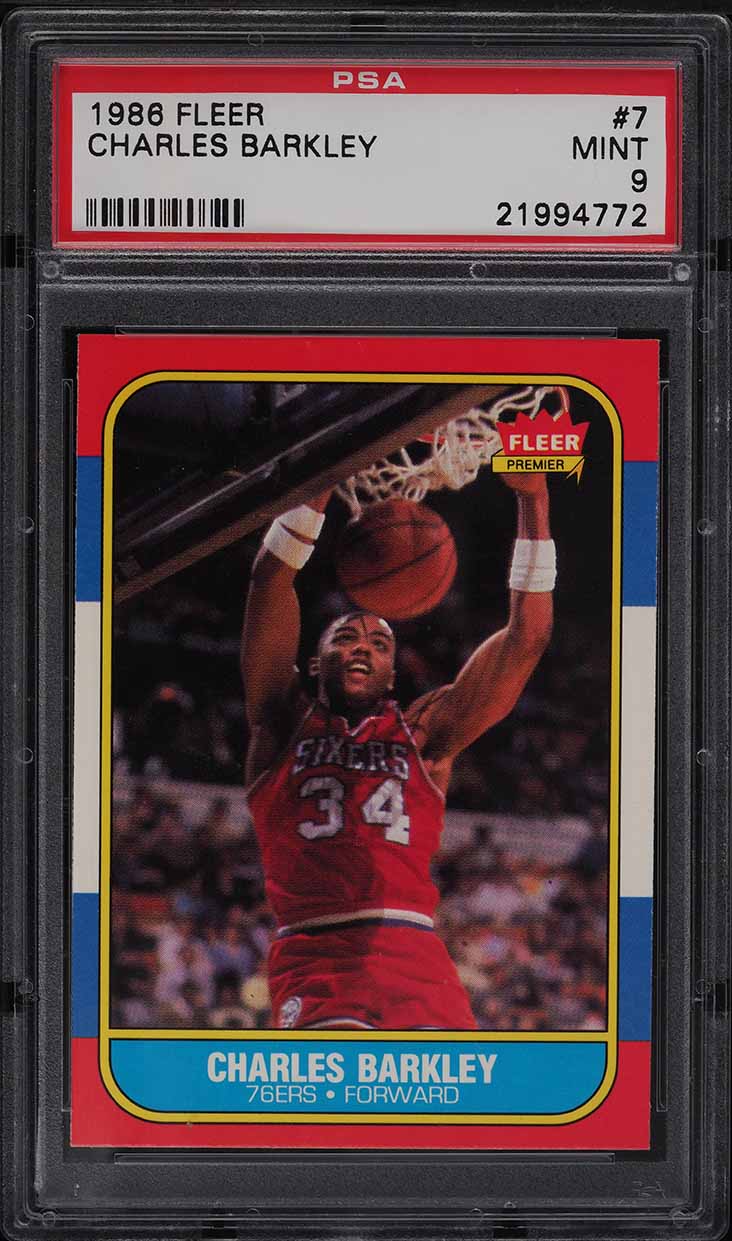
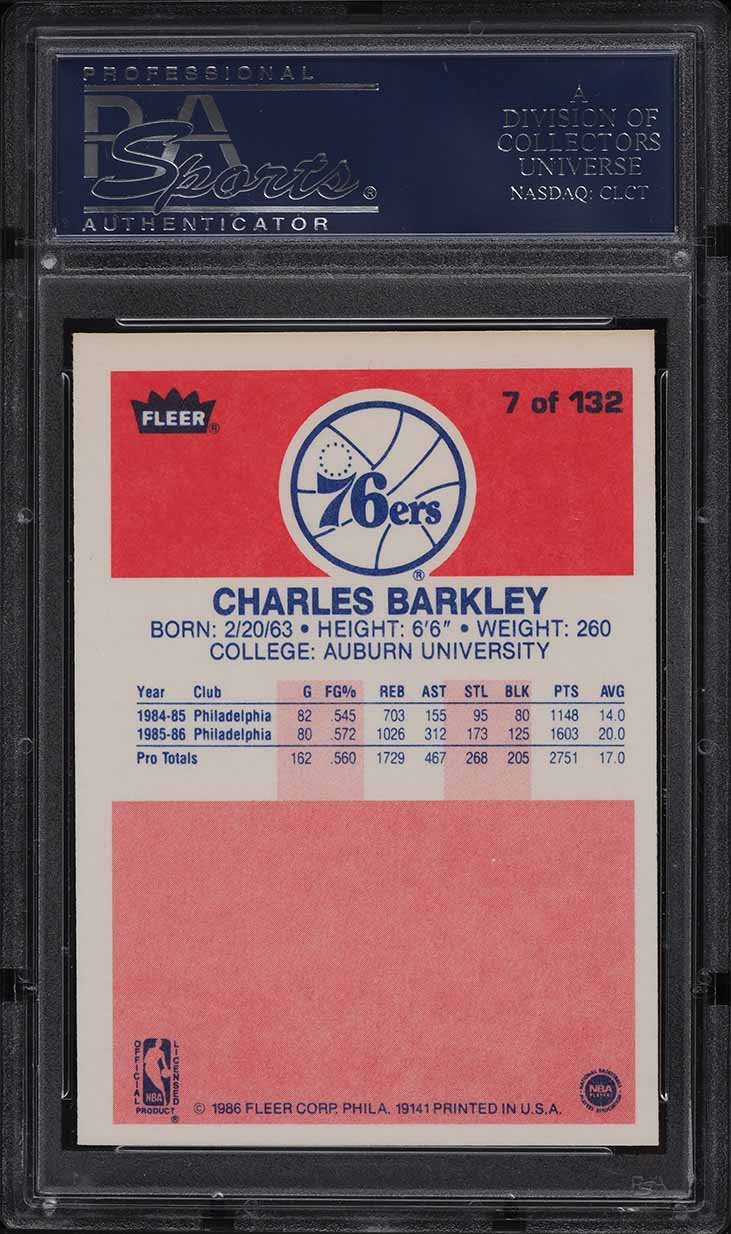
the card
notes
The 1984 draft went Hakeem Olajuwon, Sam Bowie, Michael Jordan, Sam Perkins, Charles Barkley. Every one of those five men is in these 132 cards - Olajuwon at 82, Bowie at 13, Jordan at 57, Perkins at 86, Barkley at 7 - and every one of them is holding a rookie card issued two years after they entered the league. That is the set in one line.
Barkley came out of Auburn as a junior, the SEC Player of the Year, cut from the 1984 Olympic team for his defence. Philadelphia took him fifth into a roster that had won the title the year before, with Julius Erving and Moses Malone on it. Malone taught him to rebound. He averaged 14.0 and 8.6 as a rookie and made the All-Rookie First Team alongside Jordan and Olajuwon.
By the season this card was printed for, both of those veterans were gone or going. Malone had been traded to Washington and Erving was in his eleventh and final year. Barkley, 23, took the team over and led the NBA in rebounding at 14.6 a game while scoring 23.0. He is the shortest player ever to win a rebounding title. He is listed at 6 foot 6; the Hall of Fame's own profile says he was closer to 6 foot 4.
Erving is card 31 in this set and Malone is card 69, which makes the checklist a snapshot of a handover rather than a roster.
The population says something odd worth noticing. Barkley's gem rate is 1.97 per cent, against 1.19 for the Jordan and 1.20 for the Wilkins - the same set, the same printing, and Barkley comes back gem noticeably more often. That is not explained by submission habits, because the Wilkins population is just as clean at the bottom end. The usual explanation offered for this kind of difference is where a card sat on the printing sheet, but nothing published establishes which cards sat where, so it stays an observation rather than a cause.
What follows from it is practical: PSA has recorded 246 gem copies against 94 for the Wilkins, so for anyone building this set in PSA 10 the Barkley is the easier card to find and the dearer one to buy.
population
PSA
| grade | graded | share | at this grade or better |
|---|---|---|---|
| PSA 10 | 246 | 2.0% | 2.0% |
| PSA 9 | 2,262 | 18.2% | 20.1% |
| PSA 8 | 5,130 | 41.2% | 61.3% |
| PSA 7 | 2,509 | 20.1% | 81.5% |
| PSA 6 | 1,391 | 11.2% | 92.6% |
| PSA 5 | 530 | 4.3% | 96.9% |
| PSA 4 | 239 | 1.9% | 98.8% |
| PSA 3 | 89 | 0.71% | 99.5% |
| PSA 2 | 42 | 0.34% | 99.9% |
| PSA 1 | 8 | 0.06% | 99.9% |
| PSA AUTH | 10 | 0.08% | — |
| total graded | 12,456 | 100% |
graded elsewhere
recorded 29 aug 2026. figures are a snapshot on that date, not a live count.
recorded sales
| nov 2025 | PSA 10 | — reported | $8,175 |
| reported as the most recent PSA 10 sale in a November 2025 survey | |||
dated past results, not an estimate of what a copy is worth today. figures published by an auction house normally include the buyer's premium, so they are more than the seller received.
where to buy one
Barkley is the second most counterfeited card in this set after the Jordan, so treat it with the same caution rather than the caution you would give a common. For anything above PSA 7, buy graded and verify the certificate number with the grading company before paying.
The grade ladder is wide and the middle is genuinely affordable. PSA 7 and 8 together account for more than seven thousand copies. PSA 9, at 2,262, is where the price starts climbing steeply, and PSA 10 at 246 is a different market again.
325 copies carry a qualifier and 126 of those sit at PSA 8. That is a lot of cards that look like an 8 on a listing page and are not priced like one. Read the label.
If you want the card rather than the grade, a PSA 6 is the same photograph as a PSA 10 for a fraction of the money.
find one on ebaywhat to check before you buy
Verify the certificate number directly with the grading company. Fakes from this set concentrate on Jordan first and Barkley second, and counterfeit holders exist as well as counterfeit cards.
Read the label for a qualifier before you read the grade. With 325 in circulation, clustered heavily at 8, you will meet one.
Check centring on both sides and check the red, white and blue border on all four edges. Colour runs to the edge on every side of a 1986 Fleer card, so there is nowhere for a chip to hide.
On raw cards, genuine printing is crisp and dark and counterfeits tend to be fuzzy and misaligned. Use that as a first filter, not as a verdict - published tells get built into later fakes.
sources
| Basketball Hall of Fame - Charles Barkley | 2026-08-27 |
| NBA - 1984 draft order and 1986-87 rebounding leaders | 2026-08-27 |
| Cardboard Connection - 1986-87 Fleer set history, packs and press sheet | 2026-08-27 |
| PSA Population Report, 1986 Fleer | 2026-08-27 |
| GemRate - combined population across PSA, Beckett, SGC and CGC | 2026-08-29 |
| Beckett Grading Services population report | 2026-08-29 |
| SGC population report | 2026-08-29 |
| CGC census | 2026-08-29 |